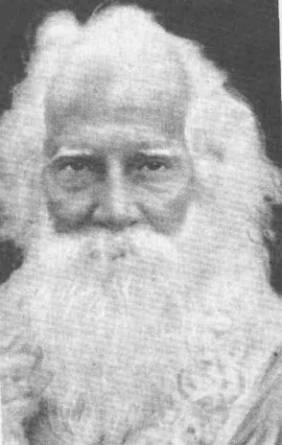
We have studied the concept of Advaita and the Bliss that results from the experience of Advaita in our blog http://advaitananda-mohan.blogspot.com/
Readers are requested to refer to blog Advaitananda for the concepts underlying our study.

Wednesday, July 13, 2011

UPADESA SARAM - SLOKA 2 - THE LAW OF KARMA

GURU POORNIMA 2011


Guru Poornima is dedicated for thanksgiving to the Guru; for the Moon (the presiding deity of the mind) on this day is full, clear, cool and bright! It has no blemish or dullness which diminishes its glow. The Guru too is pictured and extolled on this day as unblemished, resplendent and affectionate. He is replete with a sense of surrender to God. He is tolerant, devoted and truly peaceful. He is the living example of the virtues he desires us to develop. Infact He reveals the atma (the Spirit within) to the individuals and makes them free. Guru Poornima is dedicated to such divine Gurus. In fact, the God within is the Guru of Gurus. His grace can make the blind see, the lame walk and the dumb speak. By a mere touch, He can destroy the sins of the past and grant peace and joy. For this, faith has to strike deep roots in our minds; but again t o keep us fixed in that belief, a Guru is needed.
- Divine Discourse, July 27, 1980.


July 15, 2011 is the sacred occasion of Guru Poornima on which day the ultimate Guru, God Himself, is remembered. This occasion also remembers Sri Veda VyAsA, the great seer and contemporary of Sri Krishna, who classified the Vedas into four parts, the Rig, the Yajur, the Sama and the Atharvana Vedas about 5000 years ago to aid in some kind of specialization and hence possibly in their preservation. He was also the compiler of the Mahabharata, the BhAgavatham and the eighteen PurAnAs.

The picture above shows the Gopuram or Tower of the Kapaleeswarar temple at Mylapore in Chennai and displays the figure of Sri Dakshinamurthy in two poses, one with a veena and the other in a teaching pose. Sri Dakshinamurthy is a representation of the teacher aspect of Brahman or God. He is always depicted facing south (dakshina) and hence the name Dakshina (south) - Murthy (figure). He is said to teach in silence. Just being in His presence used to confer wisdom.

Bhagavan Sri Ramana Maharishi was also cast in the same mould. He was also wont to remain silent for long periods of time. People with all sorts of queries in their mind, or with unsolvable problems or with anxieties used to gather in the room at Sri Ramanashramam where He used to sit. Most of the time He used to be in silence with unblinking eyes fixed somewhere far off. However as they sat in His presence, they would go into some kind of meditation, and invariably find that when they came back to normal waking consciousness, all their problems seemed to be resolved and all their questions answered.


Similar was the experience of many devotees of Sri Sathya Sai Baba. Just a glance from Him was enough to clear doubts and give a new direction to their thoughts. He normally came out for Darshan just for about half an hour in the morning and in the evenings at His ashrams at Puttaparthi and Whitefield. Yet that brief encounter was sufficient to give relief to countless millions who used to gather to see Him. In earlier days He used to walk around and collect their letters where they used to relate their problems or seek His guidance. Occasionally He used to call people for an interview and invariably would talk only on spiritual matters. Even so the devotee felt a great sense of relief and rejuvenation after the interview. To many people He would grant rings or lockets or vibhuti which He would materialize from just empty air. These were greatly valued and treasured by the devotees.


On July 15, 2011 we will be celebrating Guru Poornima, the Full Moon of the Guru, to remember all our teachers. The first teacher for all of us is our mother. She initiates us into life and she teaches us to live. Then comes the father who guides us into education and a career and into spiritual practices. Then come our teachers, both secular and spiritual, amongst whom some of us are blessed to have the privilege of learning from grandparents and uncles and aunts and countless others. Then we graduate to come directly in contact with that one Spiritual Preceptor who puts us on the path of DhyAnA or meditation and who lifts us up out of the world created by the mind and body, into the realm of the spirit or soul. There we get our glimpse of God.

I would like to take this opportunity to share some of these Gurus who blessed me in this life.


My parents, Saraswathi and V M Sundara Rajan


My younger brother Chandrashekar who taught me the value of friendship and love....


My maternal grandparents Seethalakshmi and A V Ramanathan


My aunt Susheela who taught me the Rama Taraka Mantram for the first time in my life, my uncle Anandaraman who introduced me to Shirdi Sai Baba to whom he used to pray every Thursday and my nurse Thayamma who bestowed the love of a mother to me in my earliest years....


Nirmala’s paternal grandparents Lakshmi and V N Viswanatha Rao


Nirmala’s father V N Srinivasa Rao who introduced us to Sri Ramana and who was a friend, guide and philosopher to both of us


Swami Vireswarananda of the Ramakrishna Mission who blessed me with Diksha (initiation) in 1980


Sri Ajit Dalvi who granted me the experience of Advaita Darshana in 1991


Swami Paramarthananda who blessed Nirmala and me in 2010 on the eve of the publication of our very first blog on Advaitananda


Sri Chandrasekhara Bharati of Sringeri who is said to have blessed me when I was still in my mother’s womb in 1938. He was my grandfather’s Guru.


Sri Abhinava Teertha Swamigal of Sringeri who blessed us on countless occasions and who declared to my grandmother in 1972 that my grandfather Sri A V Ramanathan, who was his fellow disciple (Gurubandhu) of Sri Chandrasekhara Bharati, had indeed attained Moksha and there was no need for grief.
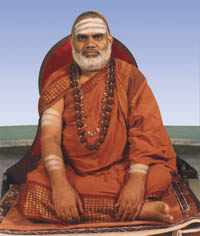


Sri Bharathi Teertha Swamigal, the current Shankaracharya of the Sringeri Math, who graciously blessed Nirmala, Chitra and me when we called on Him in 1995 just prior to Chitra’s wedding.


Sri Paramacharya Sri Chandrasekharendra Saraswathi of Kanchi who seemed to recognize me and blessed us and invoked the names of Nirmala’s grandparents who had served Him during the War years when He was in Kumbakonam. He was also known to my grandparents.


Sri Ramakrishna Paramahamsa who moved me beyond my wildest imagination and made me aware of the Divine Principle in the form of the Mother of the Universe.


The Mother called Bhavatarini in Dakshineswar, north of Kolkatta ( earlier known as Calcutta), worshipped by Sri Ramakrishna, who stands on a supine Shiva symbolizing that the Manifest Universe is a superimposition on the Unmanifest Brahman.


Swami Vivekananda, the foremost disciple of Sri Ramakrishna, who established the Ramakrishna Mission in India and introduced the concepts of Vedanta to the West, particularly to the USA, in 1899. He was a great inspiration to me when I was in IIT, Kharagpur and it was through Him that I learnt about the art of introspection.


Norman Vincent Peale, a pastor in New York, who greatly influenced my thinking as a youth with His ‘The Power of Positive Thinking’.


Lloyd C Douglas, a pastor in Akron, Ohio, USA, who became a world renowned writer, and who inspired me tremendously with His interpretation of what Jesus meant in His Sermon on the Mount.


With my friends at RP Hall in IIT KGP in 1960.. Sri Bendapudy Kanta Rao is right in the middle standing ( fifth from the right) who taught me to revere the Bhagavat Gita and who was himself initiated by Sri Sathya Sai Baba into the Gayatri Mantra. Yours truly sitting in front right.


Sri Sai Baba of Shirdi who clarified to me the concept of Avatara or the Divine in Human Form


With Sheela who taught me the value of parenthood


Chitra, the blessing from Sai, who took me to Sai....


Nirmala who enchanted me as a 7 year old and taught me to love and receive love....


Growing old with tenderness and proximity to God.....


On the day when Sai appeared in my dream and blessed us ...... with our grandchildren and children.. realizing the great blessing that God bestowed on us by making us their parents and grandparents .. realizing our responsibilities to them.. and today ...


The World is my Family!!!!


The question can arise: ‘Do you mean to say your wife and children and grandchildren are your Gurus?’
Yes, because, according to me, they teach you to love in the purest form of love...... Sri Sathya Sai used to say: ‘God is Love! Live in Love!’
I discovered the meaning of this statement in my life...
Today the whole wide world is my family and I love all with the same pure sentiments that I felt for my own family...
Again, Sri Sathya Sai Baba used to say: ‘Love All.. Serve All’.

There are countless others who helped me in my life and this may not be the forum to acknowledge the deep sense of gratitude and love I feel for them.. maybe some other time in some other context... I pray that I may have the chance to love them in a future life.......

SLOKA 2

THE LAW OF KARMA & THE UNPREDICTABILITY OF RESULTS

Paying homage to all our Gurus let us look at the Sloka 2 of Bhagavan Sri Ramana Maharishi’s Upadesa SAram:


Kruti Mahadadhow Patana Karanam
Phalam Ashashwatam Gathi Nirodhakam

Kruti – action, deed
Maha Udhadhi – the great ocean ( Raghuvamsa)
Patana – fall, decline
Karanam – cause, reason
Phalam – fruit, effect, result
Ashashwatam – impermanent, transitory, temporary, not lasting
Gathi – progress, moving to a goal
Nirodhakam – restraint, check, suppression, obstruction

The great ocean of actions ( and their effects) is the cause of ( a person’s ) decline; the results ( of all actions) area impermanent ( and unpredictable) ( because all actions and their effects compound an already confused condition) and restrain ( or prevent) progress ( of man to the goal of his existence).
The sloka 2 describes the concept of Karma and rebirth.
The ancient scriptures propound the theory of rebirth and re-incarnation. This concept is a more elaborate description of the theory of evolution.
The manifest universe is a complex collection of a variety of millions and millions of manifestations, too numerous and variegated to be capable of being described. These manifestations can, however, be classified on certain broad bases.
One method of classification is to consider the existence or non-existence of life, that is , living and non-living manifestations. Plants, animals, birds, microbes and man are considered to be living manifestations. Rocks, earth, water, minerals, sand and so on are considered to be non-living.
A second method of classification is to describe in terms of the existence of consciousness or awareness. Do all living beings have consciousness? Are there gradations of consciousness?
A third method of classification is human and non- human manifestation. This method states that the human manifestation is uniquely endowed with the power of mental choice or discrimination. However, all other forms of manifestation, whether living or non-living, are not endowed with the power of choice. They are programmed, as it were, to behave according to a specific set of rules applicable to each species. They thus display characteristics and behavior according to the program, a kind of genetic code. They stick to their code or as it is normally called, their ‘nature’. This whole group of non-human manifestation is termed loosely ‘NATURE’ or ‘PRAKRITI’.
In this method of analysis, therefore, there are considered to be three elements, namely,
GOD, the creator, who permeates everything that is manifested,
MAN, the human manifestation, who is not only programmed according to the law of nature but is endowed with the power of choice or discrimination, and
NATURE, the entire living and non-living non-human manifestation.
Man is indeed a part of nature but by virtue of the power of choice he is endowed with is considered specially and separately.
Entire Nature, including Man, is evolving. There is a continuous evolution of every species taking place over time. This evolution is cyclic and takes place over long periods of time called Yugas.
The Supreme Spirit or God manifests in all these forms. Every form is a part of God. And God allows that particular form to evolve through innumerable re-births on this planet into other forms.
The human manifestation is considered very special because of the power of choice. The power of choice in Man’s consciousness endows him with the power to either live in tune with outer nature or to live in full awareness of God.
There are many forms of living and non-living manifestations which are conscious of God. Such manifestations, such as certain plants, certain river waters, certain types of animals, are considered Divine ( or holy or sacred or auspicious). This Divine orientation or sacredness in creation itself is the result of the complex program of creation and evolution.
However, once born as a human, then the potential for turning to the Divine, is by conscious choice.
Man’s awareness of this power of choice between what can be called External Nature, and Internal Divinity, itself evolves through several births.
Once he becomes aware of the power of choice he has to choose between living ‘naturally’ in the external world, and seeking Divinity within himself. Man gets drawn gradually towards what has been called ‘The Life Divine’.
To just live one’s life ‘naturally’, performing actions with all sorts of end results in mind can be self-defeating. Man finds to his consternation that try as he does to achieve certain results, he often gets defeated. Many times the reasons for such defeats appear incongruous, indecipherable or even unknown. As he blindly goes on performing actions or work, he finds more and more confusion, consternation, misery and ruin.
He gradually realizes that behind the manifest universe where he appears to be reigning supreme, there is an invisible universe with powers much beyond him. The invisible universe is defined as Divine. And man realizes that the entire manifestation and even he himself is in the hands of the Divine.
As he realizes this truth, man turns progressively towards the invisible Divine and seeks salvation from his accumulated memories.
In this sloka, Bhagavan Sri Ramana Maharishi indicates that the second step in Sadhana is to understand and accept that life as it evolves for each of us is a product of our own previous actions. The remanent memories of these previous actions are stored in the form of subtle vibrations which cause likes and dislikes, preferences and aspects which seem distasteful. All these opposite tendencies are the result of the subtle memories or vasanas. They color our view of life and the nature of our external personalities. If we yield to them and try to live life according to those predilections we run the risk of getting results which are totally unpredictable. That is the origin of the saying : ‘Man proposes , God disposes’.
The vasanas are likened by Bhagavan to an unfathomed ocean. Often in Indian scriptures the world of our vasanas is called ‘The Ocean of Experiences’ or ‘Bhava Sagara’. When one tries to live one’s life according to one’s preferences or likes one cannot predict the results. Almost certainly, one is likely to be impeded in one’s search for happiness and one is likely to head towards some form of misery. The Buddha compared life to an ocean of misery or dukha.
The purpose of Sadhana is to move away from the outer world of likes and dislikes and enter the domain of Divinity which is hidden within the core of one’s personality. But the process called Sadhana becomes meaningful only if one accepts that the world of likes and dislikes is not the true objective of life.
Having pondered over this second stanza, we can now ask the question,
‘ Does this mean we stop living? Does this imply we move away from this world? Do we abdicate all our duties that we have, rightly or wrongly, taken on because of our likes and dislikes?’
Bhagavan proceeds to answer these questions in the further slokas.
I hope you find these notes meaningful and I do hope you are giving some thought to these questions.
The whole purpose of the Indian way of life and thought is to make this life more meaningful and result-oriented.
May you be blessed to understand the true purpose of human life and learn to make this life of yours purposeful and meaningful.

Tuesday, June 14, 2011

UPADESA SARAM .... First Sloka ... THE WILL OF GOD ...


Kartu Ajnaya prapyate phalam
Karma kim param karma thajjadam

Kartu - Supreme Spirit, God
Ajnaya - ordained
Prapyate - obtain, attain, achieve
Phalam - fruit, result
Karma - the law of karma, motive/effect, cause/effect
Kim - is it?
Param - supreme, greatest, most powerful
Karma - action , work
Thath - that, it
Jadam - lifeless, benumbed, ineffective

The Supreme Spirit or God has ordained that ( all action or work) will lead to results.
Then is the ( law of) Karma supreme ?
Work ( or action) is by itself inert.
(The results of actions flow from the will of God )

Bhagavan Sri Ramana anchors this treatise in the Divine Principle. He composed the thirty verses of Upadesa Saram in response to a request from his close devotee, the poet Muruganar, who had taken up the task of writing a poem of a hundred verses describing the experiences of a group of Rishis who had undertaken the performance of rituals in the Daruka forest and had thought that such rituals would help them acquire supernatural powers and ultimately lead to Liberation or Moksha.
To disabuse them from this obsession, the Lord Shiva appeared in the form of a Sadhu with Lord Vishnu as a maiden in his company. The Rishis were smitten with love for the maiden and thereby their equilibrium was disturbed and their powers curtailed. To make things worse, the wives of the Rishis fell in love with the Sadhu.
The legend describes the efforts of the Rishis to destroy the Sadhu, but to no avail. They then realized that the Sadhu was no ordinary person and bowed to him and sought instruction.


Muruganar

At this point, the poet Muruganar felt that Bhagavan, who he considered as the embodiment of the ultimate Truth, would be the best person to express that instruction of Lord Shiva. It was in response to this request that Bhagavan wrote the thirty verses of the Upadesa Saram in Tamil and later himself translated it into Sanskrit, Telugu and Malayalam.
The treatise takes the aspirant step by step through the processes of spiritual instruction culminating in the unique method of Direct Enquiry which ultimately gives the aspirant the experience of unity or Advaita.

THE WILL OF GOD IS SUPREME


Bhagavan initiates his instruction by establishing the primacy of the Divine Principle ( or God, Brahman, Parabrahman, Paramatma, Iswara, Allah etc as variously named in diverse scriptures and traditions). He affirms that the Divine Will is supreme and is the underlying core cause and basis for all manifestation and the consequent activity. The Divine Principle or the Self ( Atma) as Bhagavan liked to call It, is essentially stable, unchanging, permanent and everlasting. However, when It manifests as the universe, and all the components of the universe, the resultant manifest universe is full of dynamism, change, variation and activity. Thus, ‘action’ or karma is a characteristic feature of the manifest universe. This resultant activity is qualified ,modified and influenced by the innumerable and wide variety of combinations of varying degrees of the ‘Gunas’.
It is quite natural for anyone to think that the dynamic, vibrant, action-oriented manifest universe is the true reality. In his very first stanza of this treatise Bhagavan disabuses us of this illusion and categorically anchors the discussion in the Divine Principle and the Divine Will as the true motivating reality.

THE CONCEPT OF KARMA

The word ‘karma’ has two connotations in Sanskrit, that is, work ( or action) and the effects of work .
It is important to note that the results or fruits of work are themselves two fold. The first is the tangible result of the action in terms of physical or attitudinal outcomes. The second is the intangible formation of imprints in the form of impressions, memories and associated feelings. The law of ‘karma’ is primarily concerned with the second type. These are called ‘vasanas’ signifying latent fragrances of experiences or ‘samskaras’ meaning ‘equivalent to the actions’. They are also called ‘karmas’.
Why does Bhagavan commence his discourse by invoking the law of karma?
His statement is a categorical declaration that all that happens in the universe is through the will of God.
Significantly he uses the term ‘kartu’ to refer to God . The Latin ‘creare’ from which the English term ‘create’ is derived obviously has a deep connection to the Sanskrit ‘kartu’ or ‘kartru’. By using this appelation for God and not any of the other various connotations such as ‘Brahman’, ‘Iswara’ etc Bhagavan directs us to first cognize the process of manifestation of the universe.
‘Kartu’ is the cause or ‘Karana’. Creation or the manifest universe is the effect or ‘Karya’. Indian spiritual thought declares that this cause-effect relationship between God and the manifest universe is not a linear relationship. This means that the cause does not simply keep on producing the effect. The cause is not completely separate from the effect. The cause is inherent in the effect. Expressed in another way, the effect is a transformed cause and the cause is very much part of the effect.
This relationship between cause and effect is a more complex type of relationship than that between an action and the resultant physical result. When a stone is thrown at a glass window the pane is shattered. This is a single uni-directional relationship. The stone is separate from the glass. The whole glass is broken and the broken pieces bear no resemblance to the window. Similarly when a spoonful of curds is dropped into milk, then the milk uni-directionally transforms into curds. This unidirectional transformation like the shattered glass is irreversible.
That is not the case with the manifestation of the universe. God stirs the dark void of space and the universe is created. However this manifestation is followed by evolution. The manifest universe slowly evolves through various phases. Science today is carefully studying this process of evolution. But this process of evolution is not never ending. There is a limiting point when de-manifestation or involution will commence. This is called ‘laya’ or ‘pralaya’. And the magnificent universe collapses back to its primordial emptiness. The manifestation becomes ‘shunya’; however God remains.

This understanding of cyclic reversible creation describes God as both transcendent and immanent. The transcendent God becomes the manifest universe in which He is immanent, evolves , grows, matures, and then inexorably reverts back to His transcendent condition.
This transcendent-immanent-transcendent cycle of manifestation-evolution-demanifestation is the will of God, the law of nature. It is the fundamental basis of the law of karma.
The evolution of the universe takes place in a gradual manner through millions of years. The five primordial elements, the ‘panchamahabhutas’ namely, ‘akasha’, ‘vayu’, ‘agni’, ‘jala’ and ‘prithvi’ are initially formed. Non -living matter appears. Life forms appear and from amoeba they evolve through plants, fish, amphibians,birds and animals to the pinnacle of creation, the human being.
It is the human being alone who is equipped with the ability to de-manifest himself back to God. Non-living creation is inert, static and lifeless. It is the foundation for life but it does not live. All living creation is equipped with basic needs for survival called instincts. This instinctual programming of living beings is currently under scientific investigation as the field of genetics and the DNA.
Instinctual needs are the most basic such as sleep, hunger, thirst and so on. They simply ensure survival.
However, human manifestation is characterized by mind. That is why the human being is called ‘Manava’, the one equipped with mind. The English term ‘man’ is closely linked to ‘manava’ and ‘manas’.
Mind transcends instinct. While instinctual needs may be programmed in the body’s DNA, the mind is beyond body. Mind has the capacity to form habits and create habitual needs. Instinct creates thirst based on bodily needs. Habit creates a taste for beer or lemonade or whisky.
Mind also provides the power of intelligence or discrimination. It endows the human with the power of choice.
However, most humans become creatures of habit. The fulfilment of instinctual needs is pure and unsullied in itself. It is when habitual needs overlay instincts and cause preferences based on gratification of the senses that the problem arises. The fulfilment of instinctual needs does not create vasanas. That is why all living beings except humans are free of vasanas. Their evolution into higher and more developed forms is as a result of the law of nature and the will of God.
It is the human being alone who tends to stagnate life after life due to accretion of vasanas. Vasanas, like thoughts , have two components, content and feeling. The combination of content and feeling causes motives, preferences and attitudes.
The law of nature reflects the will of God. The law of karma reflects the mind of man.

In this opening verse of his discourse, Bhagavan distinguishes between the will of God which determines the process of manifestation , evolution and demanifestation, and the law of karma which determines the state of progress of evolution particularly in relation to humankind.
The human being depicts the fruition of the immanence of God in the universe and places in the hands of man the key to demanifestation. The human alone has the power either to prolong the evolutionary process or help in its successful completion.
By becoming a creature of habits, the human unwittingly aids the accretion of vasanas and the need for rebirth. Just like a car, by its very way of functioning, will slowly veer off the road if the driver takes his hands off the steering wheel, human beings can go on creating new vasanas which cause further rebirth. The law of karma is like the mechanism of a car.

The law of nature based on the will of God ordains that once a soul or ‘jiva’ has attained the status of a human being it has to revert to its pristine nature as God. However, the accretion of vasanas impedes this process and delays the progress to Godhood.
If all humanity keeps stagnating in its evolution the natural balance of the universe will be upset. Hence intervention by the God Principle Itself becomes necessary.
The natural cycle of evolution calls for a balance in the manifest universe. When that balance is upset, a correction becomes necessary.
The appearance of evolved souls such as Bhagavan is the intervention. His discourse is extremely important because it will aid countless human beings from upsetting the balance of nature.

It is in the nature of this evolutionary process in the universe for the Kali Yuga to be specially difficult. Over the 4, 320, 000 years of a Maha Yuga, the balance of nature becomes increasingly precarious towards the end period, the Kali Yuga. The Divine Principle manifests actively in various forms to correct the situation.
Bhagavan’s appearance in the last part of the 19th century and first half of the 20th century is an important correction.
This first sloka elucidates the raison d’etre for the discourse. At the beginning of the 20th century, as the clouds of World War I loom over Europe and considerable part of humankind is in chains, slavery and dereliction, with the impending destruction of World War II, the nuclear holocaust, the Cold War, and the emergence of such traits as greed, misappropriation , violence and the arbitrary neglect of the Divine Principle, Bhagavan commences his discourse by re-stating the great importance of Divinity, the creator of all manifestation and the need to accept Divinity as more permanent and stable than human life and its attractions.


Young Ramana Maharishi

REFERENCES:

http://bhagavan-ramana.org/muruganar.html

Upadesa Saram of Sri Ramana Maharishi - B V Narasimhaswami - 1970 - Sri Ramanasramam.

The Collected Works of Ramana Maharishi - Edited by Arthur Osborne - 1979 - Sri Ramanasramam.

Ramana’s Muruganar - Compiled and edited by A. R. Natarajan - 1991 - Ramana Maharishi Centre for Learning , Bangalore.

Wednesday, May 18, 2011

BHAGAVAN SRI RAMANA MAHARISHI A Brief Biography


It is common practice in presenting a literary exposition based on the writings of an eminent poet or author to sketch a brief biography of the author.
Bhagavan Sri Ramana Maharishi was more than a poet or author, for he was a Self-Realized soul, who had attained the highest level of awareness of the Divine Principle that permeates the entire universe and is the Ground and Basis and the Innermost Core of everything. Realization of Reality dawned on him suddenly and spontaneously. He never had to follow any specific process or sadhana nor did he seek or secure instruction from a Master. Yet out of his deep compassion he painstakingly clarified the processes that would help an aspirant to achieve the awareness of Reality. He was in a state of continued awareness of Reality all the time. He rarely spoke and never wrote anything out of a desire to express himself. However, the travails, the questions and the intellectual doubts of so many people moved him deeply and occasionally he would clarify some points.
Understanding his life is a means to understanding his concepts. Hence the following biography is outlined for the benefit of those who have not so far read it elsewhere.
Bhagavan was born on Dec 30, 1879 in a small village called Tiruchuzhi, about 20 km from Madura in South India. He was named Venkataraman and was the second of three brothers and a sister. His father was Sri Sundaram Ayyar who practiced as an uncertified pleader before the local magistrate. His mother Smt Alagammal was a pious and home loving lady.

Venkataraman grew up as a robust youngster full of pranks and mischief, was a good swimmer and wrestler and was not unduly attached to secular studies or to spiritual worship. After his preliminary studies in Tiruchuzhi he was transferred in 1891 to an uncle’s residence in Madura following his father’s sudden demise. There he studied in Scott’s Middle School and later the American Mission High School. He was generally indifferent to his studies.

It was in 1895 when he was about sixteen years of age that he happened to meet a friend of the family who was visiting and heard that the gentleman had come from ‘Arunachala’. Suddenly the sound of that name seemed to evoke a strange feeling in the young man. On enquiring where Arunachala was, he was told that it is the same as Tiruvannamalai. For Venkataraman it was a delightful realization to learn that it was a solid place on earth and not some intangible place in heaven.

Soon after this incident he came across a copy of a book named ‘Periya Puranam’ which contains the life stories of the sixty three Tamil Saints called the Nayanmars. As he read the book, Venkataraman was deeply moved and immersed in wonder at the remarkable experiences of the saints, which vividly described the ecstasy and bliss of true renunciation and the realization of the Divine.

From this time, Bhagavan experienced an increasing awareness of something deep within himself. For a person who would casually stop at the Meenakshi Temple at Madura on his way home, he found himself transfixed by the figures of Divinity and deeply moved from the innermost recesses of his heart.

Venkataraman became more and more introspective and withdrawn after these incidents. He became increasingly disinterested in studies and sports. He stopped his usual interactions with his friends.

It was in the middle of 1896 that a remarkable experience took place. He was sitting alone on the first floor of the house when he was suddenly overcome with the clear possibility of death. Relating the incident many years later to his earliest biographer he said that he was in perfect robust health. However this idea of death was sudden, unexpected and inexplicable. He lay himself down on the floor and came to grips with the idea of death.

He imagined his body becoming stiff and held his breath and closed his mouth and thought of the onset of rigor mortis. As he cogitated in this manner, he began to realize that although the body appeared dead, he was still fully aware of all that was happening and was fully conscious of himself or rather his Self. In that instant, he came in touch with his true Self.

He says, ‘All this was not a mere intellectual process. All this flashed before me vividly as living truth, something which I perceived immediately without argument almost. “I” was something very real, the only real thing in that state and all the conscious activity that was connected with my body was centered on that. The “I” or my “Self” was holding the focus of attention by a powerful fascination from that time forward. Fear of death had vanished at once and forever. Absorption in the Self has continued from that moment right up to this time’.

The experience fully transformed the young man. He often sat for hours immersed in contemplation. It was on one such occasion that a chance derisive remark by his elder brother appears to have suddenly made him decide to leave home.

With just three rupees, on August 29, 1896, he left home quietly and caught a train to the vicinity of Tiruvannamalai. Alighting at the farthermost station he could travel to, he walked on through several villages until, on Sept 01, 1896, he finally reached his sacred destination and could discern the mountain called Arunachala after which the town is called Tiruvannamalai ( Tiru- Sacred, Anna- Big Brother ( Shiva ), Malai- Mountain).


He reached the great temple of Arunachaleswara there, threw away his clothes, purse and sacred thread, and sank into deep meditation. He remained totally oblivious to the world, immersed in his Self for days together. He was molested by some boys, stung by scorpions and occasionally fed by a priest, but remained indifferent and unaware of all around him.


Someone persuaded him to wear a loin cloth which was the only article he possessed. He moved to various places in search of quietitude and peace. He finally reached a small cave on the mountain called the Virupaksha Cave. Someone took care of his body and fed him some food and he remained silent and sunk in meditation.

Meanwhile his mother learnt of his whereabouts from an itinerant traveler and came with her elder son to try and persuade him to return home. He steadfastly refused to talk or to respond but finally wrote a small epistle indicating that they should go back.

Tiruvannamalai is well known for its great temple of Arunachaleswara. In the month of Karthigai (generally late November or early December) a huge fire is lit at the top of the mountain to signify the light of knowledge. This festival is called ‘Karthigai Deepam’ and hundreds of devotees come to witness it and pray at the temple.


Gradually word spread of the young man in the cave and more and more people came to see him. Plenty of offerings poured in but he insisted on everything being re-distributed to the visitors.


In 1922 or thereabouts he shifted to another structure higher up on the mountain called Skanda Asramam. It was during the period 1899 to 1926, at Virupaksha Cave and Skanda Asramam that Bhagavan came in touch with a number of sacred texts in Tamil and Sanskrit brought by devotees. As he went through them he realized that all that was stated therein coincided with his own personal experience.

Many learned and erudite people attached themselves to him, seeking clarifications or guidance. Of them was Sri B V Narasimhaswami, a leading lawyer from Salem who, in the wake of some tragic incidents in his family, had renounced his career and home and come to Tiruvannamalai. Sri Narasimhaswami was a keen observer and was deeply moved by the young saint’s sadhana. He was the first biographer of Bhagavan.


Another remarkable person who came to the young Swami’s threshold was a great Sanskrit scholar called Kavyakanta Ganapathi Muni. Learned in the scriptures and a master of rituals and yoga, he sought clarity to achieve realization of the Self. The simple clarifications proffered by the young Swami shook Sri Ganapati Muni to the core and it was he who addressed the young Swami as Bhagavan Sri Ramana Maharishi, equating him with the greatest Rishis of yore who are extolled in the Indian scriptures as the recipients of the Vedas in the form of Divine revelations.


It was also during this period that Bhagavan’s mother sought refuge at Skanda Asramam following the death of her eldest son. Bhagavan who had matured considerably in his detachment finally agreed and she spent the last three years of her life serving him and other devotees at Skanda Asramam. She left her body in 1922 as Bhagavan blessed her with Moksha.

Her body was interred in a Samadhi at the foot of the hill and around it arose what has come to be known today as the Sri Ramana Asramam.

A room was built adjacent to the Samadhi and Bhagavan resided there almost always resting on a couch which is still there. His younger brother joined him and took charge of the affairs of the Asramam. Countless people came for all sorts of reasons. Bhagavan was nearly always silent and in contemplation. However, every single person who came to his proximity was singularly blessed with tremendous peace and serenity and all the person’s questions seemed to be answered. Many resided at the Asramam for long years and attained Self- Realization.

Sri Paul Brunton was an English journalist who came to India in the mid 1920-s seeking to learn yoga and understand the experience of yogis. He was guided to Sri Ramana and at his feet he found the peace he sought and experienced Reality.


Another Westerner who found peace and bliss with Bhagavan was Sri Arthur Osborne. He was responsible for starting the publication of the quarterly magazine The Mountain Path that remains active till today and symbolizes the great catholicity of Bhagavan Sri Ramana’s attitude to all the paths and all the religions of the world.


Bhagavan’s basic teaching is a simple direct method of questioning ‘Who am I?’ that leads one to detach from the body and the external world, from the mind and its oscillations and peregrinations, and finally discovers Itself as the Self. All his guidance centers around this theme. And in the great compassion and love that flows from him, as the embodiment of the Self, he has dealt with countless questions from devotees belonging to many traditions, many different schools of thought and many religions and countries.

One such beautiful treatise which he penned to clarify the doubt of a devotee is ‘Upadesa SAram’ or the ‘Essence of Instruction’ which will be the subject of our study for the forthcoming several months.

Bhagavan attained samAdhi on April 14, 1950 and his mortal remains are interred in a hall adjacent to his mother’s memorial. A Shiva Lingam and a lovely statue of Bhagavan in his favorite sitting position mark the Samadhi.


Sri Ramana Asramam continues till today in its simplicity and its discipline. The daily routine commences at 5am with the chanting of the Vedas and the ceremonial offering of milk to Bhagavan at his Samadhi. There are special pujas on selected days in the late morning. Readings take place in the afternoon followed by Veda chanting and arathi in the evening.

I got the opportunity to visit Tiruvannamalai in Feb 2011 for a couple of days, thanks to the kindness of a young blog reader who drove me down. I managed to circumambulate the Arunachala Hill (called Giri Pradakshinam) and climbed up to the Virupaksha Cave and the Skanda Asramam.

While I meditated at Virupaksha Cave, Bhagavan who represents the Truth, the Reality, the Self, Brahman, the Divine Principle, or whatever one wants to call It, gave the following benediction that spontaneously arose in my mind:

Nirbhayatvam Nirmohatvam
Nirmalatvam Niranjanam
Niraakaaram Nirgunatvam
Para Brahma Tvam
Namo Namaha

This means

Fearless Detached
Pure Blemishless
Formless Without Qualities
You are verily Para Brahman
Hail! Hail!!

I was deeply moved and felt that he gave me guidance not only for my personal sadhana but for all who chance to read this. It is both a prayer to Divinity extolling Its nature and a Blessing from Divinity showing the Path.


May all of you be blessed to visit Tiruvannamalai and Sri Ramana Asramam.

References:
1.Self Realization - B. V. Narasimhaswami - Sri Ramana Asramam -Tiruvannamalai - 1985
2.Maha Tapasvi - Life Story of Kavyakanta Ganapati Muni - A. V. Ramana - Sri Ramana Asramam - Tiruvannamalai - 2005
3.A Search in Secret India - Dr Paul Brunton - B. I. Publications - 1970
4.Ramana Maharishi - Arthur Osborne - Jaico Publishing House - 1970

Thursday, April 14, 2011

SADHANA AS A CONCEPT

The term ‘sAdhana’ derives from the root ‘sAdh’ ( a weaker form is ‘sidh’) and refers to accomplishment, reaching a goal, perfection. The term ‘sAdhana’ can thus be said to mean ‘the process or means of accomplishing perfection or of achieving and reaching the goal.’ It can be concluded that the goal being referred to is moksha or spiritual emancipation. This state is identical to the ultimate experience of Advaita Ananda or the bliss of the realization of Unity. It is the same as the realization of one’s true identity as Brahman. SAdhana is the process through which one attains that ultimate state of Atma sAkshAtkAra or Self-Realization.

This process is referred to in every scriptural text. Every person who attained to this state has described the process, the sAdhana, that is necessary for attaining the goal.

In Indian scriptural literature, many alternative means or sAdhanas are delineated. One is not aware whether any systematic historical research has been conducted to establish the chronological or historical sequence of these descriptions or alternative sAdhanas. In fact, it is generally difficult to place the scriptural texts in a historical or chronological sequence. Accordingly there have been controversies on which came first and so on. Unlike the Western approach of establishing such chronology, Indian approaches have tended to ignore this aspect and concentrate on the content of the declaration.

For our part we will try and understand the concept numerically, starting from the number 1 and going upwards.

The Unitary Process

This is the ultimate method. It is the understanding of Ekam Sath, the A-dwaita or ‘Not -two’ method. It is truly the goal, a state of complete understanding or realization. It is the end-point of all sAdhana.

The Two -fold Process

There are many ‘two-fold’ methods. Let us start with a basic method.
Understanding is itself two-fold, that is, there can be knowledge and then there can be the application of knowledge resulting in experience or anubhava. It is not enough just to have knowledge. One can become knowledgeable through reading, listening, browsing, viewing, observation and so on. Here the various sense organs are used to collect information, classify the same and become aware of insights and experiences of others, and is broadly called Theoretical Knowledge or Book Knowledge or Jnana.
However there is another very vital aspect of understanding, and that is called ‘Wisdom’ or ‘Practical Knowledge’ or ‘Experiential Knowledge’ or Vijnana.
Theoretical knowledge is not enough to attain Self- realization. Practical knowledge and experience are important to attain the Bliss of the Atma. Perhaps that is why the ancients symbolize this concept in the form of the guardians of Vaikunta, the gate-keepers to Moksha called Jaya and Vijaya representing Jnana and Vijnana respectively. One needs both theoretical and practical knowledge to reach Brahman.

The opposite of knowledge, both theoretical and practical, is ignorance or ajnAna. If knowledge is absent and ajnAna prevails, then birth in any form is inevitable.
Thus the key processes in sAdhana are the destruction of ajnAna and the acquisition of jnAna and vijnAna. The ultimate state of unity is called sujnAna.

The second two-fold process that is described is the sa-gunopAsana and the nir-gunopAsana methods. Brahman is gunAtheetha or beyond attributes, forms, qualities and such descriptions. It is inherently nirguna, nirAkAra, nirmala, nithya that is, ‘without qualities, without form, without impurity, permanent.’
prakriti or nature, that is, the manifest Brahman is full of gunAs, and is called gunamayi, charAcharamayi, vAgmayi, srimayi or ‘with attributes or form, mobile and immobile, with sounds and expression, full of auspiciousness and the means of existence.’
Yet another two fold process talks of ‘dwaita’ or the ‘two’ being the devotee and Bhagavan. This relationship is the key to realizing the unity of the two.

The Three- fold Process

This is a special variant to the straight A-dvaita approach and the two fold approach and is appropriately called Vishishta advaita. It posits three entities, the human being, nature and Brahman. It is through the process of life and with the assistance of nature that one can reach Brahman.

The Guru - Shishya approach is also a threefold process where the Shishya or student surrenders to the Guru or teacher and thus is helped or guided to the ultimate truth of Brahman.
As the Guru, although a human, is a knower of Brahman and thus is equivalent to Brahman (‘Brahmavid Brahmaiva Bhavati’ that is, the Knower of Brahman becomes Brahman Itself), this becomes a two-fold process and leads to unity.

The Four-fold Process

The classic four-fold process of sAdhana is the sAdhana chatustaya described by Sri SankarA in his famous treatise ‘Viveka Chudamani’. It comprises four elements, viveka, vairagya,ShaTsampatthi and mumukshutva or discrimination, detachment, the six disciplines that sensitize the mind for serious sAdhana and the intense desire for liberation. Sri SankarA describes this process as absolutely invaluable for attaining liberation.

The four-fold description of the human personality as symbolized by the Omkara as described in the Mandukya Upanishad is another key to achieving liberation by traversing the body, mind, soul and ultimately experiencing Brahman as reality.

The Five-fold Process

A beautiful composition of Sri SankarA is the ‘Sadhana Panchakam’. It comprises just five slokas which contain some forty exhortations to the aspirant. A careful analysis reveals that the five stanzas and forty elements contained therein are focused on five essential practices:
1. A study and understanding of the Vedas; the practice of the Karmas contained therein and an understanding of the philosophy in the Upanishads;
2. Maintenance of the body with pure Satvik food, indifference to taste and indulgences;
3. Control of Desires in the mind, a state of contentment, and the orientation of the mind to the God Principle;
4. Development of discrimination, the avoidance of arguments and debates, and indifference to likes and dislikes, heat and cold etc;
5. The company of devotees and people of Sat-bhava, solitude, renunciation of possessions and body identification and the cultivation and realization of ‘I am Brahman’.

Sri Sankara’s composition is not as orderly in its layout as shown above. The ideas appear to be randomly distributed in the five slokas. However further contemplation may reveal new patterns.

Another five-fold structure could be based on the ‘Pancha Kosas’ as also the ‘Pancha Pranas’. More study and research may reveal sAdhana-s based on these five-fold concepts.

The Six-fold Process

The Shadsampati or six-fold sAdhana is embedded in the ‘sAdhanA chatustaya’ which is itself part of the ‘Viveka ChudAmani’.

These six steps are sama, dama, uparithi, thithiksha, shraddha and samAdhAna (that is, balance, self-control, withdrawal, forbearance, intense faith in the words of the scripture and the preceptor and peace). They are pre-eminently considered essential pre-requisites for further serious sAdhana.

These characteristics form the cornerstone or foundation for sAdhana. The performance of karmas, both ritualistic and routine, help in the development of the Shadsampati characteristics.

Thus karmas with shadsampati are the necessary pre-requisite for sAdhanA.


The Seven-fold Process

This sAdhana is based on sound. The structure of sound is said to be sevenfold or sapta swara and comprises the seven notes
sa, ri, ga, ma, pa, da and ni. These notes are slightly different from the Western octave.

The saptaswara form the basis of nAda which is itself a fourfold entity in line with the OmkArA. These four components
are parA, paschyanti, madhyamA and vaikhari and correspond to Brahman, the soul, the mind and the body respectively.

VAk is the sound that proceeds from our mouth and the sound that the ear hears. However sound originates from Brahman and becomes super subtle in the soul, a conception or thought in the mind and then expresses itself as voice.

Thus sound is also called nAdabrahmam. For this reason, the composer saints such as Thyagaraja, Tulsidas and Meera are recognized as realized souls, in tune with Brahman, who expressed themselves in song. Their music is considered celestial and endowed with divine attributes.

Brahman is described as sAmagAna priya or the lover of the sound of the sAma vedA. Thus correct intonation of the Vedic mantras is considered extremely important.

The Eight-fold Process

The classic treatise on the eightfold process of sAdhana is the ‘Yoga Sutras’ of Maharishi Patanjali who came from the sAnkhyA tradition and who is said to have existed sometime between 150BCE and 100CE.

The essence of the methodology of the Yoga Sutras is called the ‘Eight-fold Path’ or AshtAnga Yoga. The eight steps of sAdhanA are:
-yama comprising the strict ‘avoidance of violence’ (ahimsa), abjuring untruth (sathya), renouncing or strictly regulating body indulgences (brahmacharya), and strictly avoiding the temptation to cheat or grab the possessions of others (aparigraha) and non coveting others’ possessions(astheya);
-niyama comprising the strict observance of purity and cleanliness, both external and internal (shoucha), cultivation of a sense of contentment (santosha), austerity and sacrifice to ensure truth and purity in thought, word and deed (thapas), serious study of scriptures, the listening to expositions by elders and illuminated adepts and rumination over the import of those statements (swadhyAya), and dedication of all actions, thoughts and speech to the Divine Principle in a spirit of total surrender ( iswara pranidhana).
-AsanA or bodily postures and exercises that help to stabilize and relax the body;
-prANAyAma or systematic breathing to re-invigorate and refresh the subtle energy or Pranic centers in the body and calm the mind;
-prayAhAra or the progressive withdrawal of the mind from the outside world and the body;
-dhAraNa or the concentration of the mind in the direction of the Divine Principle either by continuous mental chanting of a mantrA or simple concentration on the name and form of the preferred deity or form of the Divine Principle or simple concentration on an abstract concept such as the Om or simply a form of light or a flame;
-dhyAna or deep meditation which transcends the mind and enters the realm of the Spirit;
- and finally, samAdhi or the state of self-realization and mergence in the Divine Principle.
Obviously, all these steps do not take place at once or in one sitting, as it were, and it is necessary to cultivate the conditions required for each step slowly and steadily and with great discipline and regularity. The step from dhAraNa to dhyAna is a crucial one and it is said and often recommended that this step requires the help and guidance of an adept or teacher or Guru. Indeed there is a prevalent opinion that the whole process requires to be initiated by a Guru.
The AshtAnga Yoga methodology occupies a vital place in the field of sAdhanA and has helped countless aspirants to achieve the goal of Self- Realization.

It is important to note that this process is eulogized and commented upon by Sri SankarA in his concise and elegant treatise ‘Yoga tArAvali’. An extensive commentary on this is available from the Sringeri tradition written by Sri R. M. Umesh (‘Perfection through Yoga’ - Sri Sharada Trust, 1984, with a beautiful benediction by Sri Abhinava Teertha Swamigal, the then Sankaracharyal of Sri Sharada Peetham.)

The Nine-fold Process
Prayer is a powerful form of communication with the Divine Principle. It is said that in the Kali Yuga prayer and the remembrance of God is the simplest and most effective form of sAdhanA. Prayer can occur just in the mind, that is, silently, or can be articulated from the mouth. In both forms it is truly poetic and full of beauty, of harmony, of rhyme and rhythm.
The RAmAyana is full of references of the love for the Divine. The old lady Shabhari is a case in point where her devotion to Sri RAma is acknowledged and reciprocated by Him. So is the case of GuhA, the boatman, who ferries Sri RAma, Sri LakshmanA and Sri SitA to the other side of the Ganga. The devotion of Sri Hanuman is exemplary. He is shown as a person who combines, in a remarkable fashion, duty with devotion. The dedication of Sri Lakshmana himself to Sri RAma is another interesting model of conduct. So is the devotion of Sri Bharatha who could have had the empire at his will but declines to do so out of his deep devotion to the Lord. The surrender of VibhIshana, the brother of Ravana, is often cited as one of the outstanding examples of devotion. Sri RAma recognizes the true devotee in VibhIshana and accepts his surrender. When Sri RAma Himself appears dazed in His conclusive battle with Ravana, the sage Agasthya emerges to convey to Him the sacred hymn called the ‘Adithya Hrudayam’, a panegyric dedicated to the Divine Principle in the form of the Sun, which enlivens, encourages and emboldens Sri RAma to complete the sacred task for which He has in fact appeared on earth, that is, the destruction of Ravana.
During the period following Sri Krishna, considerable literary and spiritual developments seem to have taken place with the writing of the great PurAnas which are all attributed to Sri Veda VyAsa and the compilation of the Brahma SutrAs which are also said to have been authored by VyAsa. With the decline of the Vedic civilization and the onset of Buddhism, the philosophical approach seems to have given way to the devotional. This was in fact initiated by Sri VyAsa himself who is said to have authored another magnum opus, the Srimad BhAgavatham, a devotional biography of Sri Krishna. The devotional school of thought flourished apace and schools of thought devoted to Sri Krishna seem to have flourished in many parts of the land, in Manipur in the North East, to Gujarat in the West being the seat of Sri Krishna’s own kingdom, DwAraka; from Mathura and Brindavan in the north of India being the birthplace of Sri Krishna to Pandharpur in Maharashtra and Guruvayoor in Kerala. During the years that followed, several schools of devotion to Sri Krishna seem to have arisen in Bengal under Sri Chaitanya, in South India under the Azhwars, and in Rajasthan under the inspiration of Sri Meerabai, a queen who became a devotee. This sweeping development of the devotional school is often called the Bhakthi movement in contemporary writings.
This concept of devotion as a path to salvation is described in detail by Sri Krishna Himself in the Gita. He describes vividly the model devotee as one who, indifferent to the world outside of himself, oblivious of cold or heat, praise or blame, hate or love, has his mind focused single-mindedly on the Divine Principle. He describes how such a devotee, devoid of any form of expectations, dedicates every action of his to the Lord, thinking constantly of Him, with no vestige of ego or desire, and dedicates his all to the Lord. In the Gita, Sri Krishna assures such a devotee that all that the devotee possesses and all that he should ever need will be the responsibility of the Lord Himself. In moving verses in the Gita, He reiterates His commitment to the devotee and his welfare and promises that in the case of one who has his mind one-pointedly focused on Him, He will erase all the sins of the devotee and ensure that he will achieve Moksha.

The Nine-fold process is elucidated by the Narada Bhakthi Sutras, said to be authored by the Sage Narada himself and indicating several important elements of the path of devotion or Bhakthi. They are said to be hearing the names of the Lord (sravanam) , recollecting His glory (vishnu smaranam), reciting or singing His names and accomplishments (nAma sankeerthanam), obeisance and respect (vandanam), worship ( archanam), service to humanity as a manifestation of the Divine ( pAda sevanam), service to the Lord Himself (dAsyam), friendship of the Lord (sneham) and self-surrender (Atma nivedanam).


The Multi-fold Process

Every one of us aspirants for spiritual enlightenment play many roles in the secular world. We are at once a son, a husband, a father, a grandfather, a grandson, a nephew, a teacher, a boss, a subordinate, a team member, a leader, an exemplar, a servant, a master, a cook, a driver, a watchman, a writer and so on and on.

The world in which we live, work, eat , sleep, and have our existence is called the ‘Karma Kshetra’ or the field of action. All relationships, interactions, actions, reactions, and every form of activity is a ‘means to living’, a means for survival.

But the most important feature of all this action is that it is the foremost means for self-purification, for ‘chitta shudhdhi’ or ‘trikarana shudhdhi’ , the purification of one’s body and mind. It is the most basic means to absolving oneself of the vAsanAs one has been born with. This is called ‘papa vimochanam’.

Karma or action is the means of dissolving one’s karmAs or inherited latent tendencies.

Intense, dedicated, selfless performance of work is the means of attaining to the meaning of life, the true purpose of life, which is ‘moksha’.

The ‘karma kAnda’ of the Vedas, the life of Sri Rama, the articulation of ‘NishkAma karma’ by Sri Krishna, are all supremely important as it is only by performing one’s duties or ‘swadharmA’ in life that one qualifies for all the other stages of personal sAdhanA.

Conclusion

Thus, as above, one has to commence sAdhana at the lowest rung, the multifold, variegated, sometimes confusing processes of one’s life, and progress through the other levels until one reaches the stage of ‘unity’ or ‘Ekam’ or ‘A-dwaita’. That highest level is a state of supreme bliss or ‘Ananda’.

It is this tenfold approach to ‘sAdhanA’ that is presented, in a nutshell, as it were, by Bhagavan Sri Ramana Maharishi in his compact and precise thesis, the ‘Upadesa sAram’.

May every one of you who reads this be blessed with such attainment!